
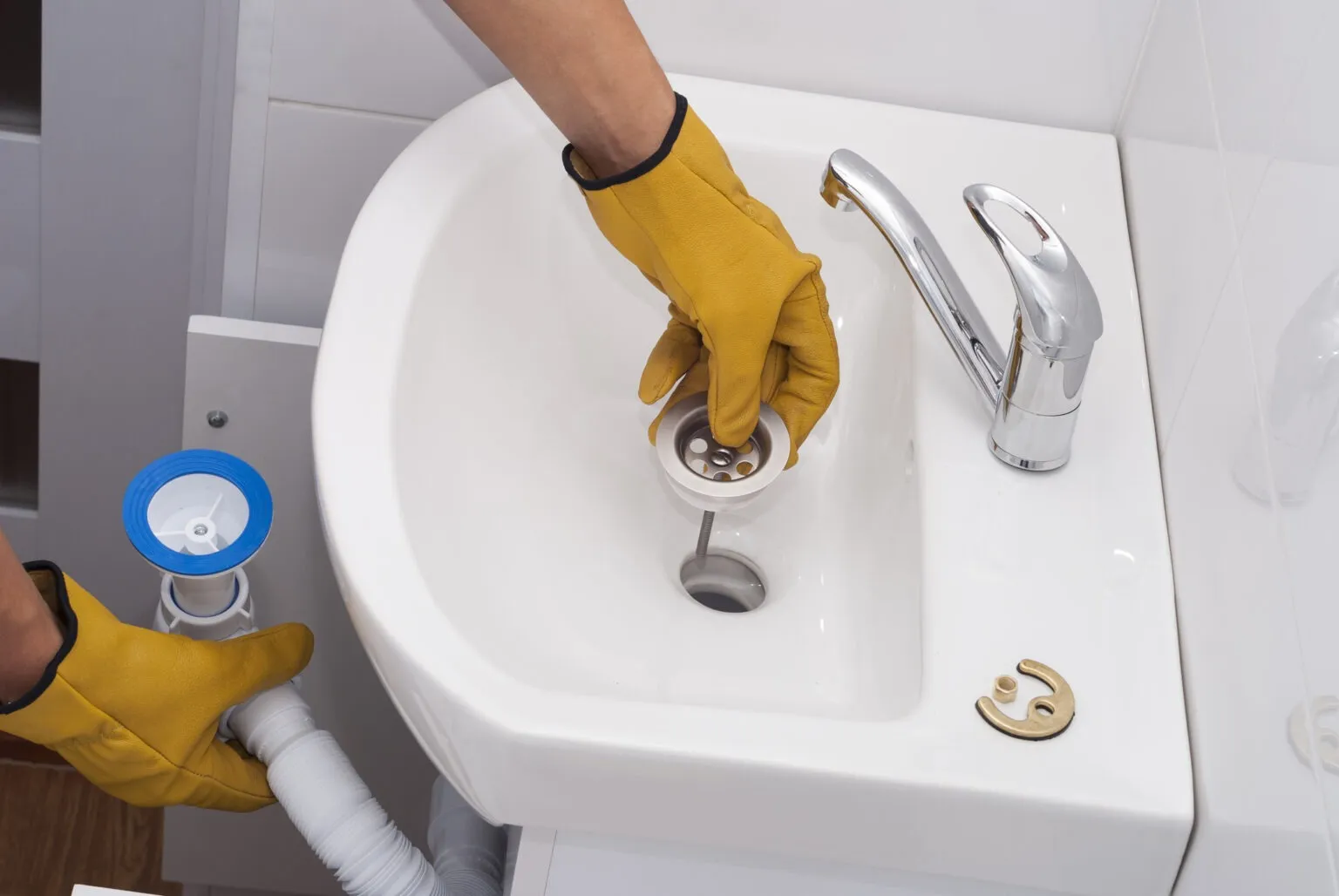
A clogged drain every once in a while is frustrating. But if you’re constantly reaching for the plunger, dealing with slow-moving sinks, or calling for help with the same drain over and over, the problem may go deeper than a simple blockage.
For homeowners in Delaware, Powell, Lewis Center, Sunbury, Westerville, and surrounding Central Ohio communities, recurring clogged drains can be a sign that buildup, damaged piping, or a problem farther down the plumbing system needs attention.
Understanding why your drains keep clogging is the first step toward finding a solution that lasts.
Why Does My Drain Keep Clogging?
Most household drain clogs develop gradually. Hair, soap residue, grease, food particles, and other materials collect inside the pipes until water can no longer move through them freely.
Clearing that material may solve the immediate problem. However, when the same drain keeps clogging, there may be buildup remaining inside the pipe or another underlying issue that hasn’t been corrected.
If several drains are slow or clogged at the same time, the problem could be even farther downstream in the plumbing or sewer line.
Emergency Plumbing Heating & Air provides professional plumbing services in Delaware, Ohio, including drain cleaning and main sewer line services, to identify and address more persistent drainage problems.
1. Hair and Soap Buildup in Bathroom Drains
Bathroom sinks, tubs, and showers are some of the most common places for recurring clogs.
Hair can collect inside the drain and combine with soap residue and other debris. Rather than forming one solid obstruction, this material can gradually coat the inside of the pipe and reduce the space available for water to flow.
You may notice that your shower takes longer to drain or that water begins pooling around your feet. Clearing only the material near the drain opening may temporarily improve the problem without removing buildup farther inside the pipe.
Using a drain screen or hair catcher can help reduce the amount of debris entering the drain in the first place.
2. Grease and Food Buildup in Kitchen Drains
Your kitchen sink may look like a convenient place to dispose of cooking grease, but grease can create significant problems inside drain and sewer pipes.
Hot grease may enter the drain as a liquid, then cool and adhere to the inside of the plumbing. Food particles and other debris can become trapped in that buildup, gradually narrowing the pipe.
The U.S. Environmental Protection Agency identifies fats, oils, and grease (FOG) as materials that can contribute to sewer blockages. The EPA also warns that some household products marketed as “flushable,” including certain wipes, can contribute to sewer problems.
For more information, homeowners can review the EPA’s guidance on sanitary sewer overflows and common causes of sewer blockages.
A better approach is to allow cooking grease to cool and dispose of it appropriately rather than pouring it down the sink.
3. Too Much Food Going Down the Garbage Disposal
A garbage disposal can handle small amounts of appropriate food waste, but it doesn’t mean everything from dinner should go down the drain.
Large amounts of food, fibrous scraps, grease, and other difficult-to-break-down materials can contribute to buildup and clogged pipes.
A garbage disposal also doesn’t make grease safe for your plumbing. Grinding food into smaller pieces doesn’t prevent fats and oils from accumulating farther down the drain.
If the disposal itself is working but the kitchen sink frequently backs up, the problem may be inside the drain line rather than the appliance.
4. Flushing the Wrong Things Down the Toilet
Toilets are designed to handle human waste and toilet paper—not general household waste.
Paper towels, feminine hygiene products, dental floss, cotton products, and wipes can create plumbing problems because they don’t break down the way toilet paper does.
Even products labeled “flushable” can be problematic. The EPA specifically identifies household wipes among materials that can contribute to sanitary sewer problems.
If your toilet repeatedly clogs even though you’re careful about what gets flushed, there may be another issue with the toilet, drain, or sewer line that requires professional diagnosis.
5. Buildup Inside Older Drain Pipes
Sometimes recurring clogs have less to do with what you’re currently putting down the drain and more to do with what’s accumulated inside the plumbing over many years.
Grease, soap, minerals, and other debris can gradually reduce the interior diameter of a drain pipe. Water still gets through, but there is less room for waste to pass.
Eventually, relatively small amounts of debris can trigger another clog.
This is one reason a drain that has been plunged repeatedly may continue to cause trouble. Opening a small pathway through the obstruction isn’t necessarily the same as thoroughly removing the material causing it.
Professional drain cleaning can address buildup that simple household methods may leave behind.
6. A Problem With Your Main Sewer Line
One clogged sink usually points toward a localized drain problem. Multiple drains backing up at the same time can indicate something more significant.
Your home’s individual drain lines eventually connect to a larger main line. If that line becomes obstructed, wastewater may have difficulty leaving the home.
Potential warning signs of a main drain or sewer line problem can include:
- Several drains becoming slow at once
- Toilets bubbling or gurgling when another fixture drains
- Water backing up into a tub or shower
- Recurring sewer odors
- Backups at lower-level drains
Emergency Plumbing Heating & Air’s plumbing maintenance services include drain cleaning, floor drains, tub and shower drains, clogged toilet drains, and main sewer line services.
If multiple fixtures are affected, treating each drain individually may not address the actual source of the problem.
7. Damaged or Aging Plumbing
Not every recurring clog is caused by something stuck inside the pipe.
A damaged, deteriorating, or improperly functioning section of plumbing can interfere with normal drainage. Depending on the condition and location of the pipe, the appropriate long-term solution may require more than routine drain cleaning.
This is where professional diagnosis becomes especially valuable.
Emergency Plumbing Heating & Air provides plumbing repair in Delaware, OH for a range of plumbing problems and serves the region with licensed, insured, and bonded technicians.
Why Does My Drain Clog Again After I Clear It?
If you clear a drain only for it to clog again a few days or weeks later, there’s a good chance you addressed the symptom without completely resolving the cause.
A plunger or basic drain snake can sometimes create an opening through a blockage. Water begins flowing again, so the problem appears fixed. But grease, hair, soap buildup, or other material may remain along the pipe walls.
New debris can quickly catch on that material and create another blockage.
Repeated clogs are therefore useful information. Instead of continually treating each clog as a separate event, consider whether there is an underlying drainage problem that needs a more thorough solution.
Are Chemical Drain Cleaners a Good Long-Term Solution?
Chemical drain cleaners can seem like the easiest option when a sink or shower stops draining, but they aren’t a substitute for identifying why a drain continually clogs.
If a drain has recurring buildup, damaged piping, or a blockage farther down the system, repeatedly pouring chemicals into it doesn’t correct that underlying problem.
For homeowners with septic systems, the EPA specifically advises against using chemical drain openers for clogged drains and recommends alternatives such as mechanical drain clearing.
If you find yourself repeatedly purchasing drain cleaner for the same fixture, that’s a strong indication that it’s time to investigate what’s actually happening inside the plumbing.
How Can You Prevent Drains From Clogging Again?
The best long-term strategy combines good household habits with appropriate plumbing maintenance.
Keep grease, cooking oil, coffee grounds, and large amounts of food waste out of kitchen drains. Use strainers in sinks and hair catchers in showers and tubs. Only flush toilet paper and appropriate waste down toilets.
Just as importantly, pay attention to how your drains normally behave.
A sink that gradually drains more slowly, a toilet that begins gurgling, or a shower that occasionally backs up may provide an early warning before the line becomes completely obstructed.
For homes with a history of drainage problems, periodic professional plumbing maintenance can also help identify developing issues before they become emergency backups.
When Should You Call a Plumber for a Clogged Drain?
A minor, isolated clog can sometimes be resolved with simple household methods. Recurring or widespread drainage problems deserve more attention.
Consider calling a professional plumber if the same drain continually clogs, several fixtures are draining slowly, you hear frequent gurgling, sewage backs up into a fixture, you notice persistent sewer odors, or DIY attempts aren’t providing a lasting solution.
Those symptoms can help a plumber determine whether you’re dealing with a localized blockage, significant pipe buildup, or a larger drainage or sewer issue.
Get a Long-Term Solution for Recurring Clogged Drains in Delaware, Ohio
If you’re asking, “Why do my drains keep clogging?”, the answer may be more complicated than another wad of hair or food caught near the drain opening.
Recurring clogs are often a sign that it’s time to stop repeatedly treating the symptom and determine what’s causing the blockage.
Emergency Plumbing Heating & Air has served the greater Delaware, Ohio area since 1977 and provides plumbing and drain services throughout Delaware, Powell, Lewis Center, Sunbury, Westerville, Dublin, Columbus, and other Central Ohio communities. The company also offers 24/7 emergency service for plumbing problems that can’t wait.
If your drains keep slowing down or backing up, contact Emergency Plumbing Heating & Air to have the problem diagnosed and find a solution designed to keep your plumbing flowing.