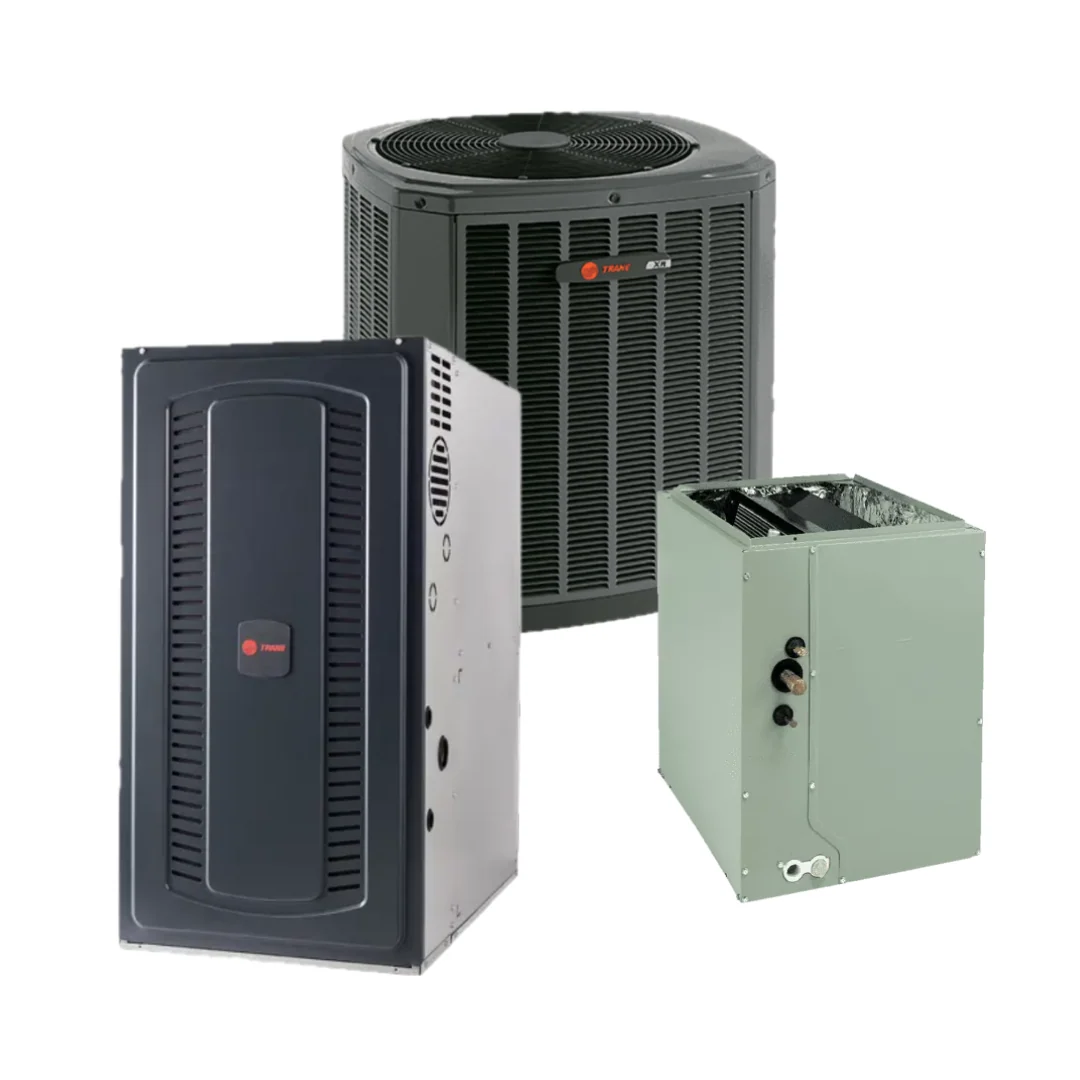
Heat Pump Replacement in Delaware, OH
Replace an aging or unreliable heat pump with a properly sized system designed to provide dependable heating, efficient cooling, and consistent year-round comfort.
A heat pump replacement is more than exchanging one outdoor unit for another. The new system has to match your home's heating and cooling load, indoor equipment, ductwork, electrical requirements, thermostat controls, and the way your household actually uses the system throughout the year. Emergency Plumbing Heating Air provides professional heat pump replacement in Delaware, OH with a focus on proper equipment selection and complete-system performance.
Homeowners often start considering replacement after repeated repairs, declining heating performance, frequent auxiliary heat operation, rising energy use, or a major component failure. In other cases, the existing heat pump still operates but no longer provides the comfort or reliability expected from the system.
If you're searching for heat pump replacement near me, new heat pump installation in Delaware, OH, heat pump upgrade, replace an old heat pump, or high-efficiency heat pump installation, our team can evaluate the existing system and help determine the right replacement approach for your home.
Call (740) 520-2021 or contact us online to discuss heat pump replacement in Delaware, OH.
When Is It Time to Replace a Heat Pump?
There is no single symptom that automatically means a heat pump must be replaced. A better decision comes from looking at the current failure, the condition of the rest of the system, repair history, comfort performance, and how dependable the equipment is likely to be after another repair.
- Repairs are becoming frequent and different components continue failing
- The system struggles in heating mode even after previous service
- Auxiliary heat runs excessively because the heat pump cannot carry enough of the load
- Heating and cooling costs keep increasing while comfort declines
- The compressor or another major component fails on an already aging system
- Indoor temperatures are inconsistent despite normal thermostat settings
- The system runs for long periods without maintaining the desired temperature
- The heat pump has become noticeably louder or rougher during operation
- The equipment no longer matches the home's needs after additions or household changes
- You want improved efficiency or controls instead of investing further in older equipment
Heat Pump Repair vs. Replacement
Heat pumps contain many individual serviceable components, so replacement should not be the automatic recommendation every time something fails. A thermostat, sensor, capacitor, contactor, motor, control board, or other isolated component may be worth repairing when the rest of the system remains dependable.
Replacement becomes more compelling when the current repair is expensive and the equipment already has other signs of deterioration. The goal is to avoid spending heavily on one major repair only to face another significant failure shortly afterward.
Repair May Make Sense When
The failure is isolated, the system has otherwise been reliable, heating and cooling performance remain acceptable, and the expected repair provides reasonable value.
Replacement May Make Sense When
Major components are failing, service calls are becoming frequent, performance has declined, or the equipment requires substantial investment despite poor overall condition.
Comfort Has Changed
A system that once heated the house effectively but now struggles during ordinary weather may have mechanical problems or may no longer be capable of meeting the home's needs efficiently.
Your Needs Have Changed
Finished spaces, additions, remodeling, occupancy changes, and other updates can alter the heating and cooling load enough that replacing like-for-like equipment is no longer ideal.
Why Proper Heat Pump Sizing Matters
Bigger equipment is not automatically better equipment. A heat pump should be selected around the heating and cooling requirements of the home rather than simply matching the capacity label on the old system.
An oversized system may cycle too frequently and struggle with consistent comfort, while an undersized system may run excessively and rely too heavily on supplemental heat during colder conditions. Both situations can undermine the benefits of installing new equipment.
Replacement planning should consider the home's size, insulation, windows, orientation, ductwork, air leakage, existing equipment, and other conditions that influence the actual heating and cooling load.
Good to know: replacing the old unit with the same size is not always the best answer
The previous heat pump may have been incorrectly sized from the beginning, and the home itself may have changed since that equipment was installed. Additions, insulation improvements, new windows, finished basements, and other upgrades can all affect the load a new system needs to handle.
What We Evaluate Before Recommending a Replacement
A successful heat pump installation depends on more than the outdoor equipment. The components around the system need to work together.
- Heating & cooling load
- Existing system capacity
- Indoor equipment
- Duct sizing
- Supply airflow
- Return airflow
- Electrical service
- Thermostat compatibility
- Auxiliary heat setup
- Outdoor unit location
- Refrigerant piping
- Equipment efficiency
- Home comfort concerns
- Household usage patterns
Heat Pump Replacement for Heating Season
In Delaware, OH, heat-pump performance during heating season deserves particular attention because the system has to maintain comfort while outdoor conditions change significantly. Replacement equipment should be chosen with cold-weather performance in mind rather than evaluated only by how it cools the home during summer.
A properly selected system should work together with its controls and auxiliary heating components so the home stays comfortable without relying unnecessarily on supplemental heat.
This makes heating performance, defrost operation, thermostat setup, airflow, and backup heat configuration important parts of the replacement process.
Understanding Auxiliary and Backup Heat
Many heat-pump systems use a secondary heat source to assist during certain conditions. Depending on the system, this may involve electric resistance heat or another heating source.
The backup system should complement the heat pump rather than compensate constantly for poor heat-pump performance. If the previous system relied heavily on auxiliary heat, replacement planning should examine why that happened instead of simply installing another unit and assuming the problem will disappear.
Equipment capacity, thermostat setup, outdoor conditions, airflow, controls, and system performance can all influence when supplemental heat operates.
Replacing the Indoor and Outdoor Equipment
A heat pump is not just the outdoor unit. The outdoor equipment works with an indoor coil, air handler or furnace, blower, controls, and refrigerant circuit as a matched system.
Replacing only one major component without considering compatibility with the rest of the system can create performance and efficiency problems. During replacement planning, the existing indoor equipment should be evaluated to determine whether it is appropriate for the new heat pump.
Emergency Plumbing Heating Air also provides air handler repair and replacement when indoor equipment needs to be addressed as part of the HVAC system.
Don't Ignore the Ductwork During Replacement
New equipment cannot overcome major airflow problems caused by undersized, damaged, disconnected, or poorly designed ducts. If airflow was weak before the replacement, simply installing a new heat pump may leave the homeowner with the same uneven-room problems afterward.
Ductwork should be evaluated when there are persistent hot and cold rooms, weak vents, excessive system noise, long run times, or obvious damage to accessible duct runs.
When needed, our team provides ductwork repair and ductwork installation to correct airflow and distribution problems.
Thermostats and Heat Pump Replacement
Heat pumps may require thermostat controls that can correctly manage heating, cooling, auxiliary heat, and system staging. An older thermostat may not provide the control capabilities needed for new equipment.
Thermostat placement and configuration matter as well. Even good HVAC equipment can behave poorly when the thermostat receives inaccurate temperature information or is configured incorrectly for the system.
For homeowners considering updated controls, Emergency Plumbing Heating Air provides Wi-Fi thermostat installation and thermostat services in Delaware, OH.
Heat Pump Efficiency: What an Upgrade Can Change
Newer equipment can offer efficiency and performance advantages over older systems, but actual results depend on the complete installation. Equipment ratings alone cannot compensate for poor airflow, incorrect sizing, bad ductwork, or improper controls.
A replacement provides the best opportunity to correct existing system problems at the same time the new equipment is installed.
That means looking beyond the heat pump itself and considering the system as a combination of equipment, airflow, controls, ductwork, and the building it serves.
Our Heat Pump Replacement Process
A heat pump replacement should begin with understanding why the existing system is no longer meeting the home's needs.
Evaluate the Existing System
We review the current equipment, repair history, heating and cooling performance, airflow, comfort concerns, and any recurring problems that led you to consider replacement.
Determine the Home's Requirements
System capacity should reflect the home's actual heating and cooling needs rather than relying solely on the size of the equipment being removed.
Review Equipment Options
Replacement options can be compared based on capacity, system configuration, efficiency, available features, controls, and how the equipment fits the home's needs.
Remove and Install the Equipment
The existing equipment is removed as needed and the new heat-pump system is installed with the appropriate electrical, refrigerant, drainage, airflow, and control connections.
Start, Test, and Verify Operation
The completed system is operated and checked to confirm proper heating, cooling, airflow, thermostat response, and overall system function.
Should You Replace a Heat Pump Before It Completely Fails?
Waiting until a heat pump stops operating completely is not the only replacement strategy. Homeowners sometimes choose planned replacement when a system has become unreliable enough that another major failure appears increasingly likely.
Planning ahead can provide more time to compare equipment, evaluate comfort problems, review ductwork, and choose the right system without making the entire decision during a no-heat emergency.
At the same time, an older heat pump that continues to operate reliably does not need to be replaced simply because of age. System condition and performance should drive the decision.
What if You're Not Sure the Heat Pump Needs Replacement?
If the system is still running but performance has changed, diagnosis should come before assuming replacement is necessary.
Our heat pump diagnostic and troubleshooting service can help identify whether the problem involves a repairable component, controls, airflow, refrigerant performance, defrost operation, or a larger equipment failure.
A clear diagnosis gives you better information for comparing repair costs with replacement rather than making the decision based on symptoms alone.
Tired of Repairing the Same Heat Pump?
If heating performance keeps declining, repairs are becoming frequent, or the system no longer delivers reliable year-round comfort, it may be time to compare replacement options instead of putting more money into aging equipment.
Call (740) 520-2021 to discuss heat pump replacement in Delaware, OH.
Heat Pump Installation and Replacement in Delaware, OH
Emergency Plumbing Heating Air already provides professional heat pump installation in Delaware, OH for homeowners replacing existing equipment or installing a heat-pump system for the first time.
A replacement project gives homeowners an opportunity to address comfort problems that may have existed for years, including poor system sizing, airflow limitations, outdated controls, and inefficient equipment operation.
Protecting a New Heat Pump With Maintenance
Once new equipment is installed, regular maintenance can help keep airflow, controls, electrical components, coils, and other system components operating as intended.
Preventive service also creates an opportunity to identify developing problems before they lead to an unexpected loss of heating or cooling.
Learn more about our heat pump maintenance services and maintenance care plans.
Related Heating & HVAC Services
Heat pump replacement can overlap with several other parts of the home's HVAC system. Emergency Plumbing Heating Air provides heating services, HVAC installation, ductwork repair, air handler service, and emergency HVAC service in Delaware, OH.
Schedule Heat Pump Replacement in Delaware, OH
Emergency Plumbing Heating Air provides heat pump replacement for homeowners dealing with unreliable heating, recurring repairs, major system failures, poor efficiency, uneven comfort, and aging equipment throughout Delaware, OH and surrounding Central Ohio communities.
Call (740) 520-2021 now or contact us online to discuss replacing your home's heat-pump system.
Heat Pump Replacement FAQs
How do I know whether to repair or replace my heat pump?
Consider what failed, the overall condition of the system, repair history, comfort performance, and expected reliability after the repair. An isolated component failure may justify repair, while repeated failures or a major repair on deteriorating equipment can make replacement more practical.
Do I have to replace my heat pump just because it is old?
No. Age is useful context, but system condition matters more. A heat pump that remains reliable and performs well may still provide useful service, while a system with repeated failures and declining performance may justify replacement sooner.
Can I replace my heat pump with a different size?
Potentially, but system capacity should be based on the home's current heating and cooling requirements. Simply choosing a larger unit can create comfort and cycling problems, so proper sizing is important.
Do I need to replace the indoor unit when I replace my heat pump?
That depends on the existing equipment and compatibility with the new system. Heat pumps operate as part of a matched indoor-outdoor system, so the indoor coil, air handler or furnace, controls, and other components should be evaluated during replacement planning.
Will a new heat pump stop my auxiliary heat from running?
Not necessarily. Auxiliary heat can be a normal part of heat-pump operation under certain conditions. Properly sized and configured equipment should use supplemental heat as intended rather than relying on it to compensate for poor heat-pump performance.
Should my ductwork be checked when replacing a heat pump?
Yes, especially if the home already has weak airflow, hot and cold rooms, excessive noise, or long run times. New equipment will perform best when the duct system can move the required amount of air effectively.